Thursday, March 1, 2012

Culinary Tourism: Eating the Natural State.

Pea Feast at the Emerson PurpleHull Pea Festival and
World Championship Rotary Tillar Races. (Kat Robinson)
In the age of divisive politics, food has become the universal neutral. It’s both a comfort and a luxury. Food Network and The Cooking Channel have taught us that everyone can cook, and adventurers like Anthony Bourdain have shown us that food can be as integral a part a destination as any attraction. It’s a language you don’t need lessons to learn. The act of breaking bread together hints at an acceptance between two parties, a shared medium for discussion and amusement.

When you talk with someone who returns from a trip, you are bound to hear about the dining experience. When you go to another city, a foreign locale or somewhere exotic, you go “native.” The concept of “When in Rome” takes hold strongest when we are hungry and in need of adventure. This exercise, this new practice is at the roots of the idea of culinary tourism.

Food also builds the identity of a place. Let’s try an exercise. What’s the first food you think about when I name these cities? When I say Philly, you say… cheese steak. When I say Memphis, you say barbecue. When I say Boston, you say cream pie. When I say Denver, you say omelet. When I say Buffalo, you say wings. When I say Peking, you say duck.

It works for states, too. When I say Mississippi, you say Mud Pie. When I say Georgia, you say peaches. When I say New York, you say Cheesecake. When I say Arkansas, you say… what? What do you say? Because that’s up for debate.

Cornbread and Rolls at Williams Tavern Restaurant
at Historic Washington State Park. (Kat Robinson)
What is Arkansas food? Our legislature defines a few specifics. The state’s grain is rice. That’s pretty straightforward… after all, if you drive across just about any part of East Arkansas you’ll see flooded fields where it’s getting ready to come up. State drink is milk. Does a body good. Our state fruit AND vegetable is the South Arkansas Vine Ripe pink tomato.

The Cave City Watermelon Feast. (Kat Robinson)
We celebrate a lot of foods here. Hope claims to have the world’s largest watermelons, while Cave City lays claim to the sweetest. Johnson County has peaches. Altus, grapes – lots of grapes but particularly Arkansas muscadines and the Cynthiana. Emerson celebrates the PurpleHull pea. We raise chicken, hogs, buffalo, catfish and rabbits; we hunt deer and duck; we grow and process okra, squash, winter wheat and soybeans – now even as Edamame.

Our state sandwich might as well be the Reuben; there’s a version of the corned beef on rye with dressing on about 80 percent of our non-ethnic restaurant menus. The Reuben shouldn’t make sense here. Its culinary roots come down to us from Chicago through Oaklawn Park, where pickled corned beef has been brought to the kitchens in huge tubs from the Kelly Eisenberg Company since the park opened back in 1904.

Cheese dip at Stoby's. (Kat Robinson)
Cheese dip was born here, courtesy of Blackie Donnelly, who went to Mexico and came back and stirred up this spice-packed yellow concoction at Mexico Chiquito in North Little Rock. It’s been served since the 40s. Dozens of restaurants these days claim they have the best – Stoby’s, Pancho’s, Arkansas Burger Company, Juanita’s. This month Arkansas will be represented at the World Roadfood Festival in New Orleans by Dogtown Coffee and Cookery, who do their own great homage to Blackie’s original dip.

Uncle Dean's fried pickles.
(Kat Robinson)
Some say chocolate gravy got its start in the Ozarks… whoever decided to throw that cocoa in the skillet with flour, butter and sugar, thank you so much. Fried pickles came to us out of Atkins, where Bernell “Fatman” Austin served them up from the sixties on out of the Duchess Drive In. Possum pie might as well be the state pie; you can find that layered delight in restaurants all over.

Some of our food traditions are drying up. When’s the last time you went out in the backyard and dug up some sassafras root for tea for your sore belly? The last time you put sugar on your rice for breakfast? Put some sorghum molasses on your cat-head biscuits? Had yourself a mess of poke salat with some crackling cornbread? We don’t eat the way we used to.

Even in our manufacturing, some things have just gone away. We used to have the Finkbeiner Meat Packing Company, which was the first place anywhere to make cheese-filled hot dogs – right in our state’s capital city. Brown and serve rolls were created in Little Rock by Meyer’s Bakery back in the ‘30s.

Some have come back. Grapette and Orangette came out of Camden in the 20s, one of the “Fooks Flavors” sold out of the trunk of Benjamin Tyndle Fooks’ car. They died off in the 70s after being sold a couple times over, only to be brought back by the Wal-Mart folks in 2000. And Yarnell’s, which closed its doors in June 2011 to the heartbreak of millions of Arkansawyers, will reopen soon in Searcy under new ownership.

Crackers and homemade salsa at Herman's Ribhouse
in Fayetteville.  (Kat Robinson)
We drink iced tea. We batter and fry our catfish and serve it up with green tomato relish and hush puppies. We like jelly made from just about anything in the world, including muscadines, jalapenos, raspberries and pecans. Our oldest restaurants still serve up club crackers while you wait for your meal, either with butter or with a little homemade salsa – no one really knows why, just that you just eat these things when you are brought to you.

Fried cabbage as a side item. (Kat Robinson)
Sliced tomatoes are a side dish to themselves, cabbage is delightful fried and our strawberry shortcakes are made with berries, sugar and biscuits. Our barbecue is pulled meat pork in the east, beef in the southwest and always accompanied on white bread or bun with coleslaw. And most places are like as not to have pie – be it cream, meringue, fruit or fried.

Knawin' down a beef brisket sandwich with slaw, as
it ought to be, at Imajerk BBQ in Cedarville. (Grav Weldon)
We love down home cooking and sitting down for a noontime meal together, eating what we catch and shoot and pull out of our gardens. Some folks don’t understand all that; we've moved away from our rural culture this past generation and it’s getting to where we have kids who have never sat on a deer stand or pulled weeds or shelled peas. These days, there’s a new generation of chefs and historians who are still trying to grasp those roots and pull us up to the realization that we have a special sort of cuisine here in Arkansas, always have. And it deserves to be celebrated.

So we have this culinary heritage of eating what comes from our soil and our forests, and of these unique things we have created in our kitchens. And we are so lucky to have many of the restaurants that have shaped the flavor of Arkansas still in business today.

Take McClard’s Barbecue. Back in 1928 Alex and Gladys McClard owned the Westside Court Motel on Albert Pike in Hot Springs. They had one lodger who, after spending two months at their motel, couldn’t come up with the $10 he owed on his bill. He made them an offer – a recipe for what he called “the best barbecue in the world.” Not long after, the McClard’s closed down the Westside Court Motel and opened Westside Barbecue… smoking goat. They moved down the street and opened McClard’s BBQ in 1942, and it’s been there ever since. They don’t serve goat any more, but they do serve pork ribs along with chopped pork and beef sandwiches. They’re still made with chopped cabbage and a layer of mayo on the bun, and they still offer a huskless tamale that you eat with saltine crackers. Chocolate malts are still served in little luncheon glasses with a squirt of chocolate syrup.

Franke’s Cafeteria is Central Arkansas’s oldest continuously operating restaurant. It started out as a bakery in downtown Little Rock in 1919. Five years later, C.A. Franke reopened it as a cafeteria at Capitol and Louisiana. It’s moved a few times, grown some branches, and today you can dine downtown or out west at Market Street. The food never changes at Franke’s, which is a blessing to food lovers and historians. You can still go to the start of the line and choose any of a selection of congealed salads – tomato aspic, cherry Coke salad, buttermilk pineapple, pistachio, Waldorf and cranberry. The Escalloped Eggplant Casserole, the grilled salmon patty, the corn pudding… all are as they have been for generations of diners.

Other restaurants have stood the test of time, such as the original Dixie Pig in Blytheville, open since 1923 and still serving up pork barbecue with a vinegar based sauce. The White House in Camden has more than 50 types of beer available and has been doing mean steaks since 1907.

Some restaurants which have stuck around for a while but evolved still serve up a few of those old classics. Batten’s Bakery up in Paragould still makes the original chocolate fried pie, a glazed crust filled with a mixture of cocoa, sugar and butter, not the pudding-like custard that has become common in recent years.

Rhoda Adams.  (Grav Weldon)
A lot of those traditions stand today on forceful personalities, such as Rhoda Adams. The Lake Village resident still gets up each day, ties tamales for steaming and packs them in coffee cans to sell to travelers. Woody Woodward crawled out of his cropduster back in 1985 and started to sell pork barbecue with his wife out of an old RV at the crossing of Highway 14 and 49 in Waldenberg, and still does to this day. The DeVito brothers still run a trout farm at Bear Creek Springs, where you can catch your own and have it for dinner.


We’re building new traditions, too. Have you watched any of these food programs lately? Read magazines or the paper? If so, you may be aware of the biggest movement in food these past few years. It’s not some special hot item or nouveau cuisine they’re talking about. The big focus has been on the locavore movement. Loca- for local, -vore for omnivore. Broken down, it simply means eating everything from where you are.

Here in Arkansas there’s a crop of restaurants that’s taking this to heart. One of the most noted examples is Chef Lee Richardson at The Capital Hotel in Little Rock. Lee came here to Arkansas after Hurricane Katrina chased him out of New Orleans. He set up shop here and has decided to make Little Rock his home. He’s committed to both the locavore idea and to bringing back the roots of Arkansas cuisine. The menu at Ashley’s at the Capital is littered with Arkansas foods: rice grits, tomato jam, pan roasted duck breast, blackened cornbread and brown butter catfish – all new interpretations of old favorites. Across the lobby at Capital Bar & Grill you’ll find spicy meat pies, house cured meats, Andouille gravy and chips, warm soybeans with salt and butter, housemade soda crackers with pimento cheese and those complimentary fried black eyed peas. Just about everything prepared at the two restaurants comes from within or close to Arkansas’s borders.

The buffalo burger at Boardwalk Cafe. (Kat Robinson)
Up in the little Ozark town of Jasper, you’ll find a place called the Boardwalk CafĂ©. Joseph and Janet Morgan have made a big commitment to serving up local fare. They have a burger that comes completely from within a 100 mile radius, with a choice of beef or buffalo from Ratchford Farms in nearby Marshall, locally grown produce from inside Newton County and buns made near Fayetteville.

The restaurant landscape is changing everywhere as people grow more curious about where their food comes from. They want to experience the flavor of a place, everything from the taste of the food to the atmosphere it’s served in, and they want to take away something from that experience.

So, we’ve talked about our foods, where they come from and who serves them up. I have a question for you. What’s the first thing you do when you go somewhere you haven’t been before? You look for a souvenir that will remind you of a place. I do this. I go to Louisiana, what do I bring home? Chicory coffee. Hot sauce. Pralines. I go to Wisconsin, I bring home cheese curds and Cherry Dee-Lite. Dallas? Dublin Dr. Pepper, pecan patties and Uncle Willie’s buttermilk pie.
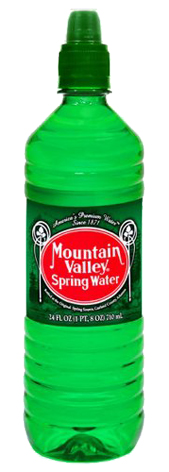
Does anyone know what sort of products Arkansas is known for outside of Arkansas? I will tell you this. I have found one particular Arkansas product on tables at some of the finest restaurants in the United States. That… is Mountain Valley Water. The distinctive green bottle with the red or blue label (red’s for the spring water, blue for the sparkling) has replaced Perrier as the house water of choice at some of the finest dining establishments in the world. That’s a pretty cool thing.

But what else? A lot of people might say Tyson. Yes, headquarters for Tyson is here. And yes, they should be supported.

There’s Riceland. The company got its start in Stuttgart way back in 1921. Riceland’s not just a manufacturing company; it’s actually a farmer owned cooperative with more than seven thousand farmer members. It’s the world’s largest miller and marketer of rice. Riceland rice is sold all over the United States and all over the world. We’re not just talking about white rice here; we’re talking about brown rice, specialty rices, rice flour, rice bran oil, milled rice… stop me if I’m starting to sound like Bubba in “Forrest Gump” but they do a lot of stuff with rice, and with soybeans as well.

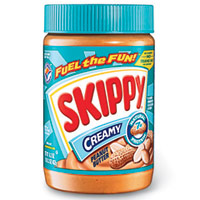
Did you know Skippy Peanut Butter was made in Little Rock? No joke. Well, sure, Skippy is made other places, too – but since 1977 there’s been a plant here going strong, packing up both creamy and chunky versions. If you’ve ever been by the plant, you know that roasted peanut sensation.

Cheese straws come from Little Rock, too, just down the road from Skippy. Twenty years ago, Jamie Parham took a 100 year old family recipe for cheese straws, made them up from natural ingredients and baked them and started selling them. The company’s name comes from Janis and Melanie – the daughters of Jamie and her husband Greg. Today, J&M Cheese Straws are nationally known, as are the delicate yet powerful tea cookies they make and sell.

A lot of steaks and burgers in Arkansas have a particular flavor to them, thanks to Cavender’s Greek Seasoning. Spike Cavender, back in the sixties, had a friend in the restaurant business who was close to passing away. This friend gave Mr. Cavender the spice blend recipe. In 1971, Spike’s Greek Seasoning was renamed Cavender’s Greek Seasoning because of a trademark issue. These days, you can find Cavender’s coast to coast, and even as far away as Japan and Iraq. Spike’s granddaughters, Cara Cavender Wohlgemuth and Lisa Cavender Price, run the business up in Harrison.

Petit Jean Meats came about in 1926, when Felix Schlosser and Ellis Bentley opened a meat market in Morrilton. The Ruff brothers, who delivered products for the company, took over its management in the 50s and have kept this Arkansas manufacturer growing all these years. Petit Jean Meats sells hams, bacon, summer sausages, hot dogs and all sorts of other meat goods all over Arkansas – and last year they broke into Texas with a partnership with the Dallas Cowboys. Petit Jean Meats have an Arkansas flavor to them that I’ve never found duplicated elsewhere.

Smoked turkey plate at Burge's in the
Heights in Little Rock. (Kat Robinson)
And then there’s Burge’s… an operation out of Lewisville that also runs an old-fashioned drive-in restaurant down in southwest Arkansas, as well as the great lunch room up in the Heights in Little Rock. What’s Burge’s known for? Smoked turkeys, of course, still brined and smoked the way Alden Burge started doing it in his backyard in Lewisville in 1953. The dark meat on those turkeys, I swear, tastes just like ham. Marvelous.

But those aren’t Arkansas’s only meat manufacturers. Did you know we have the largest rabbit meat manufacturer in the United States up in Rogers? Pel-Freeze got started from a rabbit named Betsy Ann, a pet given to Herman Pelfrey’s son all the way back in 1911. The pregnant rabbit soon multiplied into an overabundance of rabbits, and the H. F. Pelfrey Company came out of that. Pel-Freez came to Arkansas in 1947 via Robert Dubbell, who married into the Pelfrey family and moved the operation here.

War Eagle Mill near Rogers. (Kat Robinson)
Then you have one of the oldest mills in the South. The original War Eagle Mill was built between 1832 and 1834 along the War Eagle River outside of Rogers. That one burnt in 1848 and another was built. In fact, the current facility was built in 1973 and still operates with an undershot water wheel today. All the grain ground at War Eagle Mill is certified organic, as is the restaurant on its fourth floor, The Bean Palace. At War Eagle Mill, you can pick up several different sorts of flour, corn meal, mixes and more.

And what goes with all that? Philip F. Bryant knew dang well what did – condiments. Today, the Bryant Preserving Company in Alma makes Old South brand pickles – regular pickles, pickled okra, pickled watermelon rind, pickled asparagus, carrots, beets, jalapeno slices, mushrooms, onions, eggs – yes, pickled eggs – and a product known as the Tomolive, which is a tiny pickled green tomato great for using in martinis.

Most of those companies have big distribution… they’re available by mail order from anywhere and you can find a lot of those products close by. And then there are the smaller producers.

Dennis Kolb of Bear Kingdom
Vineyards fills jelly jars. (Kat Robinson)
We have just outside of Little Rock a tiny jelly maker known as Bear Kingdom Vineyards. Dennis Kolb has been making jelly since he left home as a young adult; he and his wife Linda started up their own vineyard and then a company in 1995. They’re making jelly from Arkansas grapes, scuppernongs and muscadines and packaging them in Arkansas glass with Arkansas labels. And their Cherub’s Rapture may be the most amazing thing ever done with an Arkansas raspberry.

L.C. Ratchford of
Ratchford Farms. (Grav Weldon)
And then there’s L. C. Ratchford. He retired from welding to, well, do some welding. Built up fences and corrals all over the family homestead outside of Marshall… and acquired a herd of buffalo. Today you can purchase buffalo steaks, roasts, ribs and such along with jerky and buffalo sticks, elk products and of course beef from the family farm… over a three state area. L.C. gets up several mornings a week and drives fresh meat from the farm out to locations all over Arkansas, Missouri and Oklahoma. I noticed lately he’s been selling peas and jellies made out there, too.

Juanita's cashew brittle.
(Kat Robinson)
Then you get into Arkansas and its candy roots. Who among us hasn’t at some point or another picked up a bucket of that famed Juanita’s brittle? They make peanut, cashew and pecan brittle, perfectly thin and crispy. They are now the only brittle-maker in Arkadelphia, but I bet they’ll be there a while.

M. L. Greer and his chocolates.
And then there is the Greer family heritage here in Arkansas. Martin L. Greer started making candy in 1924 to sell along with the family’s produce at market. A Greek candy shop in Texarkana hired him on, and he worked his way up, apprenticing at a series of candy shops across Texas. He came back here and got a family started, and in 1956 Kopper Kettle Candies was born in Van Buren.

Dr. Martin Greer. (Kat Robinson)
Martin L. Greer didn’t spawn just one candymaker. His namesake, son Martin Greer, learned alongside his dad and for a while back in the sixties he made the candy they served up at Silver Dollar City. Dr. Martin Greer has been an educator and an animator and has researched every candy made at his place up in Gateway. Everything sold there is made in the shop – excepting the soda in the refreshment cooler. His son Uriah is learning the craft, too.

We have fudge makers as well. In Eureka Springs, there’s Two Dumb Dames Fudge Factory. Run by Lana Walker and her daughters BJ and Amanda, the shop specializes in small-batch fudge and candies from family recipes – and they ship just about everywhere.

In Conway, a new one has sprung up – PattiCakes Bakery. It’s the inspiration of Patti Stobaugh… wife of Stoby’s founder David Stobaugh. The bakery is known for cakes and pastries – but also makes a fantastic fudge available by mail order.

The latest candymaker on the scene in Arkansas with massive appeal is a little operation in Heber Springs called Lambrecht Gourmet Toffee. I probably shouldn’t say little. David Smith started out making pecan toffee for holidays for friends and family. When he started managing the Red Apple Inn, owner Patti Upton asked him to start making it to sell at Aromatique’s shop. He and his wife Nancy went from there to candy shows in Dallas and Atlanta and in 2002 started selling his product as Red Apple Inn Southern Pecan Toffee. The company grew so fast that five years later Lambrecht Gourmet Toffee was founded. Today you’ll find it for sale in gift shops and grocery stores in 45 states – and on your pillow when you stay overnight at the Capital Hotel.

MaryClare Macarons. (Grav Weldon)
And then there are macarons. Mary Jo Selig and Clare Thomas Williams were looking for macarons to serve at the wedding of Selig’s son and William’s daughter, and every place they’d order from they’d get broken macarons. So they decided to do it themselves. MaryClare Macarons was born, and now these ladies are selling their gourmet macarons direct to consumers and through The Savory Pantry in downtown Hot Springs.

Now, here’s one more for you – right here in West Memphis. It’s not a single manufacturer, but it could be the birthplace of something fantastic. It’s the kitchen incubator project. This facility, which is coming into play soon, is a six thousand foot licensed facility where local entrepreneurs can lease time to create wares such as jellies and jams, dips and other pre-packaged foods. It’s going to allow a lot of folks to be able to create these items without leasing out space in another state or building a private facility of their own. Fascinating project.

I haven’t even made it into beverages, but I believe I should – especially because they have a special circumstance set upon them. That would be our alcohol.

Our state’s laws make it illegal to have wine shipped to your home – any wine, whether it’s made here in Arkansas or not. Fortunately, we have distributorship around these parts that means you can pick up most Arkansas wine at most Arkansas grocery stores. I wish we had more restaurants serving Arkansas wine… but I’ll get to that down the way.

Post Familie Vineyards. (Kat Robinson)
Arkansas winemaking dates back to 1880 – though I suspect wine was being made long before then in this state. 1880 is the year our two oldest wineries opened – Wiederkehr Wine Cellars, started by Johann Andreas Wiederkehr atop St. Mary’s Mountain above Altus – and Post Familie Vineyards, started by Jacob Post in the valley below. The wineries both survived Prohibition and generations later continue to grow. Today, both by direct lineage and by marriage, all of the Altus wineries are tied together by family bonds – including Mount Bethel, Neumeier Winery and Chateax Aux Arc. Due south across the river in Paris, you’ll find the masterworks of Arkansas winemaker Bob Cowie.

In recent years we’ve had three more wineries pop up. Doug Hausler and Edwige Denyszyn have started an organic locally based winery in Eureka Springs called Keel’s Creek that focuses on Ozark grapes. Their wines are made from squeezed grapes only – no concentrates here.

Margie Raimondo.  (Grav Weldon)
There’s Raimondo Winery, the little winery growing up in Gamaliel. Margie Roeland has picked up the family trade, moved here from California with her husband and is not only making wine but vinegars and oils as well at the Blue Lady Resort, which they own on Lake Norfork.

And now Tontitown Winery has come into the picture. Heather Peachee took memories of squashing grapes in the basement as a child to make the family’s homegrown wine and created a new winery. She and her husband David now run the area’s only winery in the old Taldo House.

Arkansas wines are often assumed to be fruity and sweet, but I’ve found that’s not really always the case. Yes, we have our muscadine wines and such, but some of our newer wineries specialize in much dryer fare, and some of the older places are getting on-board. I’d personally like to see more Arkansas wine offered on menus of restaurants all across the state.

Then there are the other alcoholic beverages. Diamond Bear Brewery in particular has grabbed ahold of the market. The Presidential IPA keeps winning awards, and you can find Diamond Bear on tap all over Arkansas and in Mississippi as well.

Refined Ale Brewery in Little Rock is Arkansas’s first minority-owned brewery. Made in three-barrel batches, the brewery offers light beer, ale and malt liquor and is the only malt liquor brewer in the South.

And then we get into that gray area of moonshine… well, sorta. Rock Town Distillery in Little Rock is making up bourbon, gin, vodka and what it calls Arkansas Lightning – a whisky made from all-Arkansas grown corn and wheat. The Distillery opened in 2010 and already has bottles on shelves in stores and in many of our local bars.
So we’ve gone through all these different manufacturers of good things to eat. What does this mean to you? Sure, you’ve picked up a history lesson today, but what was it all about, really?

It’s an education. It’s hard to tell exactly where you’re going if you don’t know where you came from – and that’s a very big part of being a chef or a restaurant owner here in Arkansas. It’s nice to know our roots.

But you don’t have to be in the foodservice industry to take part in the culinary experience. You don’t have to cook to share some of our food. Culinary tourism will do just fine on its own – but by pairing up lodging operators, restaurants, farms and communities, we can bring even more visitors to Arkansas to discover this unique experience.

I’m about to utter a bad word here – one that consultants like to throw around a lot. It’s the word synergy. I’ve heard it a lot here and there, usually when someone is putting out their hand for a little money while trying to get you to talk to someone else and form a partnership. You don’t really need that consultant. You just need to know your community.

Now, I am lucky, or blessed, or insane – I haven’t quite figured out which. But I have had the opportunity over the past five years to travel Arkansas’s highways and backroads. I have stepped in fields just starting to bloom – sometimes up to my knees in mud, but I’ve been there. I’ve been in the front rooms and kitchens of hundreds of restaurants from Eureka Springs to El Dorado. I’ve shared my experiences on a number of blogs and in several publications… and what I hear back, over and over again from readers, is this.

“I want to go where you go and eat what you eat.”

If anything, what I’ve been writing about all this time, what I have been selling, is the Arkansas food experience. And all I’ve really done is share my notes on what can be done almost any day. My experiences are only unique in the fact that I’ve searched them out and had them. There are very few things I’ve done that someone else couldn’t do.

I’ve done it by sending out email and picking up the phone when I want to go somewhere. I’ve called the Post Familie and asked if I can come out and hang out in their vineyards and photograph grapes… and received not only a vineyard tour but a visit to the wine cellar and tastings straight from the tank. I’ve gone out to the Scott Heritage Farms, where Jody Hardin and Barbara Armstrong are growing all sorts of produce and raising antibiotic free chickens and hogs – and met Hercules, the nearly 600 pound Old Glouchestershire boar that’s the big papa of a budding organic hog farm.

I’ve walked through the entire product line at Petit Jean Meats – backward, but all the way from the packaged hams and hot dogs through the entire hot dog making process. It’s not as disturbing as you think, and a minute in the smoking room there will make you feel like you’ve gone to barbecue heaven.

I’ve walked right into the building at Cavender’s and asked for a tour and got one, right then and there! Got to see the whole packing enterprise and was about overwhelmed with the scent of Greek Seasoning. Martin Greer took my photographer and myself back through the candy kitchen and back to his studio – he’s a fantastic artist and animator – who knew? I’ve spent an afternoon in Dennis and Linda Kolb’s kitchen through the entire process of making a batch of Bear Kingdom Vineyard jelly, from the sterilization of the jars to the reduction of the jelly, the pouring and the capping and the labeling.

And L.C. Ratchford, bless his heart, spent a day showing us all over his 400 acres of Searcy County farmland, which is a whole lot of up and down on Ozark hillsides, sharing with us the story of his farm and of the generational cattle herd he’s got up there. I got licked by a buffalo, I kid you not.

The savvy culinary tourist will seek these opportunities out. But the average food lover? Unless you have it out there for them to find, they’re not going to seek out experiences like this, no matter how much they might want to enjoy them. That’s where you come in.

To bring these food lovers to Arkansas takes just a little time, a little creativity and a little communication. It’s as easy as picking from one column and another, most of the time.

Start with your lodging. Say you’ve got a bed and breakfast. You’re up making breakfast in the morning for your guests. What do serve them? Eggs and bacon and biscuits? Well, that’s nice. Sounds all right. But how about this?

You could be serving them Petit Jean Meats Peppered Bacon, locally sourced fresh farm eggs, Honeysuckle Lane cheese, biscuits made from War Eagle Mill flour topped with fresh dairy butter and Bear Kingdom Vineyard jelly made from Post Familie Vineyard grapes. Served with muscadine juice. Suddenly you have an Arkansas made breakfast from Arkansas products. You might even keep a little extra product available for sale for your guests to take home.

Of course, if you have a bed and breakfast, are you offering cooking classes? I know a lot of locations might not have a prime kitchen for cooking for more than one or two people at a time, but a lot do. Hotels do. Heck, you don’t even need a kitchen for many things you could be whipping up. You could have a tomato tasting like the folks at the Winthrop Rockefeller Institute up on Petit Jean Mountain have every year. Speaking of which – they offer several cooking classes throughout the year.

If you have the space, consider talking to restaurant chefs in your area. Perhaps you can work a trade-out and build a package together. Picture this. You arrange an overnight or weekend stay, where in the morning a chef from a restaurant offers a cooking class at your establishment. As part of the package, the guest gets to dine at that restaurant that evening.

A Farm to Table event at P. Allen Smith's Moss Mountain
Farm near Little Rock.  (Kat Robinson)
Take it a step further. What if your chef accompanies guests to the farm where a key item to be served that night at dinner is grown or raised? Meet your dinner, as it were. P. Allen Smith and his folks have been doing that for a while now. They pair up with a nationally known chef, bring that person to Moss Mountain Farm and have them work up something that’s growing on the farm – be it tomatoes, pumpkins, chicken, whatever. Guests visit the place where their food originates and then sit down for a meal of said food. And hundreds of folks sign up for the privilege.

Let’s take it a step further than that. Say you’re in Stuttgart. What’s Stuttgart known for? Duck hunting and rice. In the right season, you could snare not only the hunter but the spouse. While the hunter in the family is out in the blind with a guide, the spouse (and I’m not naming who’s who – I mean, in my family, I’d likely be in the blind while the hubster would be kicking back in town) could meet with a chef, maybe even drive out to see what a rice field is like, come back and learn how to prepare a number of dishes. The hunter comes back in with whatever has been harvested that day, and both hunter and spouse participate in the preparation of the ducks. Everyone sits down together, has a great meal with their chef and go home at the end of the visit with the full experience. That’s not just farm to table, that’s air to table!

And it doesn’t just have to be about cooking. A good daytrip for someone in Little Rock right now can be found just a few miles away in Scott. Right now the Plantation Agriculture Museum has an exhibit up they call “Ham and Eggs.” It’s about the historic raising and marketing of farm animals. Sound boring? Not to the culinary tourist. It’s a skip across the way to the Scott Heritage Farm, where Jody Hardin would likely (if they were willing) put them to work on the farm. I kid, mostly. Tour the farm, learn about the okra and the collard greens and the PurpleHull peas and the hogs and chickens. Then go over to Hardin Market right off Highway 165 and have some smoked chicken or pork ribs and some sides – all grown right there on the farm. It’d take maybe three hours, and it’d be memorable.

Meringue pies at Charlotte's Eats and Sweets in
Keo.  (Kat Robinson)
You think it’s crazy? You haven’t been at Cotham’s Mercantile in Scott or Charlotte’s Eats and Sweets in Keo during lunchtime. It is fascinating to see the tour buses that pull up. People make special trips just to come eat a Keo Classic and some of that world-famous pie, or to get a Hubcap burger. There are people who go to Altus just to spend all day going from winery to winery.

50 best Arkansas burgers tried
in 2011. (Kat Robinson)
And then there are food trails. I’ve been doing a lot of my own research these past few years, following big stories for certain publications out there. I’ve done extensive cover stories on the best breakfast in Arkansas, the best pie. Been working on a catalogue of Arkansas burgers. And I have people who have told me they keep those publications in their car so when they go somewhere in the state and want a bite to eat, they have a handy reference. You can eat good pie all the way across Interstate 40 from west to central Arkansas – Fort Smith, Van Buren, Alma, Dyer, Lamar, Russellville, Morrilton, Conway, Little Rock… even out to DeValls Bluff. And from what I have heard, some have made that exact attempt. Bless their hearts.

We can capitalize on that. We can draw people into Arkansas to try our food, to learn about what and how we eat. They can take that information back to their home states and share it… and it’ll bring others out of curiosity. We keep at it, we share what we have and grow our food culture, next thing you know we’ll have the Anthony Bourdains of the world beating down our door.

Thursday, February 23, 2012

Burger Joint of the Week: 4Square Gifts.

Burgers come in many shapes in sizes, from tiny sliders to the humongous Ed Walker's five pounder. Most are beef, though some vary into different grounds, such as the Buffalo burger at Jasper's Boardwalk Cafe. Some are served on sesame seed buns, others not. Many come with cheese or have it available.

4 Square Gifts in the River Market offers its own burger, complete with a slightly sourdough bun, Cheddar cheese, sweet caramelized red oniions, fresh green leaf lettuce and tomato and chipotle aioli. Yet there's no meat component.

My dining companion and I dropped in for lunch a short time back, eager to enjoy a meatless meal together and to explore the Arkansas gifts throughout the store. 4 Square is such an inviting place, with high ceilings and big windows, a nice place to share sandwiches while sitting on stools in the sunlight reflected off the Oppenheimer Hall across the way.

They offer so many items I like to see in a lunch joint, such as a wide selection of beverages ranging from juices to milks to high fructose corn syrup free Boylan Sodas. There are usually items you can pick up and run with (after paying, of course) in the cooler, and slices of pie as well.

But we were in the mood for a hot lunch. My dining companion hadn't been there before and was concerned that whatever we ordered would not be enough to sustain us throughout the afternoon, so we agreed to order hummus and pita chips with our selections.

It took around five minutes for our order to be processed, put together and set out on a tray, which we fetched ourselves. He had chosen the vegan Chickpea Wrap ($6.25), a preparation of chick peas marinated in Indian curry. The wrap was a 12" flour tortilla, smeared generously with hummus then slathered with the chick pea mixture. Carrot slivers and marinated tofu chunks and a little bit of spinach were added before the substantial filling was tightly rolled into a nine inch cylinder and sliced in two. The curry was thick with the flavors of cumin and turmeric with strong
notes of ginger and a touch of fenugreek. I suspect the hummus that lined the tortilla was of the red pepper variety.

The peas had been cooked to barely firm for a texture not that dissimilar from
oatmeal. The wrap had the advantage of being marvelously filling, and my dining companion took half of it away to eat later.

Our hummus ($3.25) shared was pretty standard but with a nice citrus note that gave the concoction a pleasant bite. It was served with pita chips. We had originally considered the Spinach and Artichoke Dip ($6.50), but it was out that day.
So, the 4 Square Burger.

$8.75 initially sounded like a bit much for the burger, but the menu did not mention it came with roasted red skin potato wedges, delightfully seasoned with salt, pepper and parsley. The burger itself was a marvelous surprise; on first bite it gave the same sort of mouthfeel I have become accustomed to in my burger quest. While lacking the traditional caramelized crust formed when a burger hits a griddle, this patty did have enough of a crust to it to give the impression of a crust-bite. It was of a bean and tofu base, I believe, though I may be missing one of the patty ingredients. It was nicely flavored with onion powder and garlic... in fact, as the burger was consumed even more of the garlic flavor came through. The Cheddar was just salty enough to give the burger its balance against the sweetness of the caramelized onions. The aioli was a little sharp at times, but not too sharp. In all, this is a well thought out sandwich.

When it came time to go, it was no work at all to pack our leftovers, since everything had been presented to us in biodegradable cartons in the first place. My companion and I were both left with afternoon snacks after our meal. I can in all honesty say it was a good value.

Does it make burger criteria? That... is a matter of opinion. I think it does, just as much as The Root Cafe's excellent Mushroom Burger or one of the great black bean burgers at The House. It may be time to re-examine what really constitutes a burger, and place garden burgers such as this firmly in a new category to be explored. I will be interested in seeing how many other non-beef burgers make the cut.

You'll find 4 Square Gifts at 405 President Clinton Avenue in the River Market in downtown Little Rock. It's open at 9:30 a.m. Monday through Saturday and 10:30 a.m. on Sunday, and closes at 7:30 Monday through Thursday, 9 p.m. Friday and Saturday and 4 p.m. on Sunday. Check out the website or call (501) 244-2622.

4square Cafe & Gifts Menu, Reviews, Photos, Location and Info - Zomato

Thursday, February 16, 2012

Burger Joint of the Week: Top Rock Drive In, Alpena.

The first thing to note about the Leopard Burger is that it isn't actually made of leopards. Nor is it spotty. In fact, the only reason behind the name of the enormous burger offered at Top Rock Drive In up in Alpena is the name of the school mascot. Still, there is a bit of relief to be found in the fact that no cats were harmed in the creation of this burger.

But I will tell you there was a lot of frying involved.

Tuesday, February 7, 2012

Ranger Boats: The Little Flippin Shop Makes Most of the World's Bass Boats.

Getting ready to purchase that boat at one of the big shows this season? Chances are, if you’re buying a bass boat, you’re about to buy a Ranger -- or one of the other brands that come out of the Ranger Boat plant up in Flippin. The plant makes 72 percent of the bass boats sold in the world, plus walleye and pleasure boats, every one of them custom made by hand. Take a tour with us and learn more about this north Arkansas enterprise.

It started in 1968 in a garage on Main Street. Forrest and Nina Wood ran a guide service on nearby Bull Shoals lake. The Woods saw the value in making the then heavy, clunky wooden boats used on the lake and on the White River less weighty, more maneuverable and easier to handle. They and his brother Mickey set up shop in a garage on Main Street and made six fiberglass boats that would be the first boats to carry the Ranger name.

The Woods bought an old nightclub on the outskirts of town, the Silver Star, a former stop-in popular with the workers who built Bull Shoals Dam back in the fifties. There they expanded the operation, building 600 boats in 1969 and doubling that in 1970. Boats were $1000, complete with lights and steering.

On May 4th, 1971 fire consumed the plant. The next day some 40 orders were salvaged from an old desk. Several dealers offered to pay for their boats in advance to help fund reconstruction, and friends and family helped clear the slabs. 40 days later, the new plant was in operation.

Ranger Boats started at a time when Americans were turning to the water for fun and pleasure. The innovations that came out of Flippin became industry standards. Ranger became the go-to boat for tournament fishing, especially with Bassmasters and with the operation previously known as Operation Bass -- which was renamed FLW for Forrest L. Wood’s initials.

Mickey Wood
Wood sold Ranger Boats in 1987, but the family remains tight with the company. I took a tour of the facility with Mickey Wood, Forrest Wood’s younger brother, and learned a lot more than I thought I would ever know about bass boats than I ever thought I might absorb.

***

Mickey Wood was at the front desk of the headquarters building when I walked in the door. We shook hands and he asked me what I wanted to know. I told him I was along for the ride and to share whatever he thought was pertinent.

We headed over to the plant next door in his truck. Past the break room up front we went right into the plant, an operation that seemed to span out a mile in every direction. I followed him through the noise straight back to a section where there were a sea of boat hulls on rolling racks.

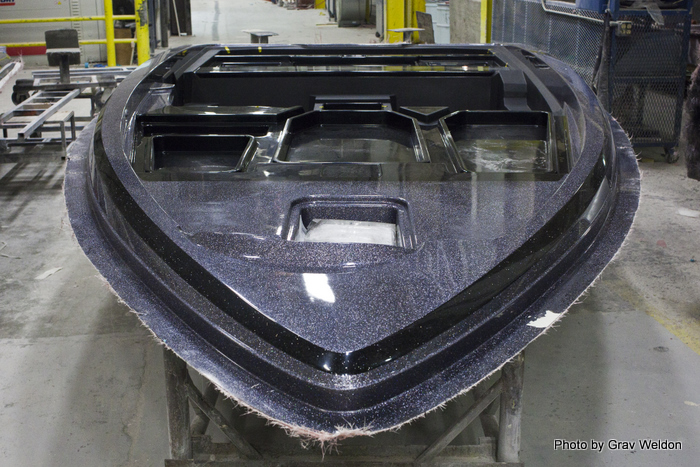
This is where boats begin. Each one begins as two parts, a fiberglass hull and a fiberglass deck. The paint and fiberglass process takes 48 hours to complete. The molds themselves take six days to make. They’re created from wooden plugs and are designed these days by CADCAM designers, though back in the day they were carved by hand. The plug is then cast in fiberglass, which becomes a mold. Each model requires a hull and deck mold to be made, and the process to bring that concept to reality can cost a half million dollars before the first boat is even assembled.

First thing into the mold is the color, a blend of glitter and clear gel coat that’s layered in to create the particular color for each boat. There are dozens of different sorts of gel coats, from primary colors to golds and silvers and coppers to teals and ambers and all sorts of blends. They’re sprayed
The "Indian Hand Signals" left by workers.
directly into the molds, layer after layer, the details of the custom design taped off and sprayed down. You’ll never have to worry about that trim coming off, either -- since it’s part of the actual coat of the boat.

“We build the boats directly into the mold like this,” Wood told me, “then when we pull it out it will be a colored hull.”

The deck is the same way, and those deep and shiny bright colors are also sprayed into a mold that will eventually be reversed and attached to a hull. Every layer of paint goes into the mold before the fiberglass is applied, to give the best definition of every detail.

The next step is the first application of fiberglass. Inch-long fiberglass threads are mixed with a catalyzing agent and a resin and applied to the mold. The cobalt and peroxide resin covers the inside of the mold, dries and becomes a virtually unbreakable solid in a matter of hours. The plant will utilize about 7.5 million pounds of fiberglass thread this year to create these boats.

We watched as a series of crews handled several boats. One team sprayed down a deck with the fiberglass mixture from a special nozzle. The next team went over the deck with brushes and fine tools to make sure the mixture had made it into every nook and cranny in the mold. Another crew was fitting yet another deck with reinforcements, which were in turn sealed in with another layer of fiberglass and gone over by a team with more fine tools.

“The fiberglass is 3/16ths of an inch thick when it goes on,” Wood said. “20 minutes later, they’ll roll the fiberglass and make it smooth. More fiberglass goes on, and it’s made smooth. Each different model gets different guts and different reinforcements, but they all surpass Coast Guard requirements.”

They’re not all Ranger brand boats. Four brands are built here. Ranger, of course, but also Triton, Stratus and Champion. When the boat market began to sink a few years ago, Ranger acquired these other brands and brought them to Flippin. Each one has its own specifications, but every one has to meet the high quality standards set by the Woods.

We passed alongside more boats in further states of construction, with even more layers of reinforcement and fiberglass added. Some already had tanks attached, live wells that allow circulating water to keep fish from expiring before they’re brought in to shore. At the end of the third line, there’s a big metal frame overhead. Workers attach each deck to the frame, pull it out of the mold and invert it. It goes back on a rack and keeps being moved along the line.

Ranger only makes fishing boats -- bass, walleye and multi-species. Some boats are strictly for fishing, others for pleasure… really, it’s up to the consumer. Each one is custom made. If you want a Ranger Boat, you go to the dealership and place your order. There may be a floor sample that the dealership ordered -- but even that boat was custom made for that location.

But why all that fiberglass? Why the emphasis on reinforcements? Wood says it’s to fit the needs of tournament fishermen. “Our boats are meant to go up to 60 to 80 miles an hour on the water,” he told me. “Bass fishermen in tournaments want to get from point A to point B as quickly as they can. They’ll practice for weeks before the tournament on the lake to see where they can find fish.”

“What’s the fastest you’ve recorded a boat at?”

“An eighteen and a half footer with a 250 horsepower motor, with two people and tackle? 78 miles an hour,” Wood said.

We came at that point to the only robot in the entire plant -- a special machine that cuts out every little indentation, every live well access, every place a hose or a tank goes in with water shot from a high force nozzle at 6400 psi. It’s all programmed into a computer by one of the guys at the plant… and it’s done this way for the utmost accuracy.

From there, we walked back further into the plant, to an area where the hulls are painted and processed. Though the type of fiberglass is different here, the hulls go through the same sort of process as the decks over a 48 hour time period. The biggest difference is in the type of fiberglass strands employed in the composite construction. Within the fiberglass layers in the hull molds, woven robing is placed. This 24 ounce dry fiberglass fabric is impregnated with resin to create an almost impenetrable hard coat.

After several applications of fiberglass and several finishing rounds, the hull is completed. Once it’s dry, it’s paired with its deck. A big yellow frame is used to pick up the deck, slide it over to the hull and carefully drop it into place to be permanently joined. This is when any additional component between the hull and deck is added. For instance, in the Ranger brand boats, there’s a certain type of foam that’s pumped between hull and deck to make it even more unsinkable. The other boats made at the plant have different procedures and different materials -- but once again, it’s all made to far surpass Coast Guard regulations.

The gas tanks are added at this point. Each gas tank holds between 30 and 60 gallons of gas -- which may seem like a lot, until you realize that the average boat won’t get you the sort of mileage on the water you get on the road. You think your car gets bad gas mileage? Boat motors tend to get fewer miles to the gallon than automotive motors. Factor in the resistance of the water and it all makes sense. A two stroke motor gets about four miles to the gallon, while a four stroke gets about six. There are also kicker motors -- smaller motors useful in hitting the exact spot or maneuvering once you find your exact location.

Speaking of motors, they’re attached at this point, too -- whichever type the model calls for or the customer asks for -- be it Mercury, Yamaha, Evinrude, Honda or Suzuki. Other bits are added at this point too -- rub rails, dials and fittings all go in before the boat is sent on to the finishing room next door.

Boats aren’t just a means to get where you’re going on a lake any more. Ranger Boats are fully integrated into the 21st Century with top of the line fish finders, GPS onboard satellite locators and all sorts of computers. You can easily sink thousands of dollars into your boat with these custom additions. But people order them.

The Department of the Interior for the State
of Louisiana ordered 75 of these special
made boats to perform patrols. Once
they’re shipped down south, they’ll be
fitted with the appropriate artillery
and munitions.
There are other add-ons, too, like these boat anchors that sit on the back of the boat on either side of the motor. Instead of the traditional weight-on-a-rope, these are long fiberglass poles that telescope downward to the bottom of the waterway. There are two so you can also hold your position at the same time.

Then there are roofs -- yes, boat roofs, T-tops to keep the sun off your face and neck. They’re more often added to pleasure crafts, but I saw a few being fitted to tournament boats as well.

After each boat has been assembled and before they leave the plant, each boat is subject to a water test. They’re submerged in a water tank and the pumps and electrical are tested. If there’s anything wrong, the boat will be deconstructed back to the point where the error can be fixed, and then they’re rebuilt. Wood says they’ll go as far as they have to, to fix a problem before a boat is sent out. Everything is checked -- the clamps, the live well, even the radio.

Once the boat is finished and checked over, it’s introduced to its custom built trailer. The trailers are built to accommodate each boat -- aluminum trailers for saltwater boats and channel tube for freshwater boats. They’re designed to perform well at any speed limit and come with similar gel coat and flair to each boat. Once the boat’s on the trailer, a shrink wrap is applied and the boat is ready to go.

Most of the boats are sent to the dealership from whence they were ordered by one of the trucks in Ranger’s fleet -- but sometimes a customer wants to come pick up a boat himself. Mickey Wood told me about a gentleman from New Jersey who drove down to the plant to pick up his boat. He says the guy had just arrived about the same time the boat came off the line. It’s like getting a new car, or even better.

The plant will make about 4500 boats this year. That may not seem like a lot -- until you consider the number of people who own a boat. Most folks who purchase a boat purchase it for a lifetime. Boats are handed down through families. Few buy more than one boat -- with the exception of pro fishermen, of course. It’s an investment, but if you take care of a boat it can easily last you a lifetime. That means waxing the hull, properly winterizing the boat and just being smart about boat care.

4500 boats may seem like a lot, but the market has shrank significantly. While some
64,000 boats were made market-wide five years ago, there will be just 9000 new boats made this year. Half of those boats come from Flippin, and Ranger Boats comprise 72 percent of the bass boat market worldwide.

The recession has taken its hit here. Just a few years ago the plant was running 24 hours a day, three shifts of workers hauling tail seven days a week to keep up with the demand. But then the bottom fell out of the market.

Ranger was lucky -- and smart. By acquiring other brands the plant has been kept busy, and layoffs have been stymied. Today workers operate in two shifts over five days a week and are just able to keep up with the demand.

The little boat-making operation has come a long way, and it’s guaranteed a great future for the Flippin community. Thanks to good decisions and a great product, Ranger Boats should be around for a long time to come.

***

At every major bass tournament -- and a lot of the smaller ones, too -- you’ll find the Ranger repair team. Mickey Wood says the team helps get every boat -- not just Ranger Boats -- back on the water. He says it’s a simple philosophy.

“You never want to burn bridges, because you never know when that guy might want to fish from your boat.”

A good number of Ranger Boat owners were introduced to the vessel thanks to the old
TV show “The Fishing Hole,” the longest running fishing program in television history. Today the boat Jerry McKinnis used in the early days of that program resides at the Forrest L. Wood Outdoor Sports Gallery, just south of the Ranger Boat facility in Flippin.

“The Fishing Hole” went from being a Little Rock television staple to a nationwide
program in 1979, when the then-fledgling ESPN network picked it up. McKinnis still
lives in Flippin, having fallen in love with the area. Each year, thousands of Ranger Boat fans pass through the museum while they’re in the area, whether it be for vacation or a tournament. It’s open Tuesdays and Thursdays. The two-story gallery features hundreds of magazine covers heralding Ranger Boats, plus all sorts of memorabilia and a taxidermy collection. It’s something to see.


For more information on Ranger Boats, check out the website.  There's also a website for the museum.